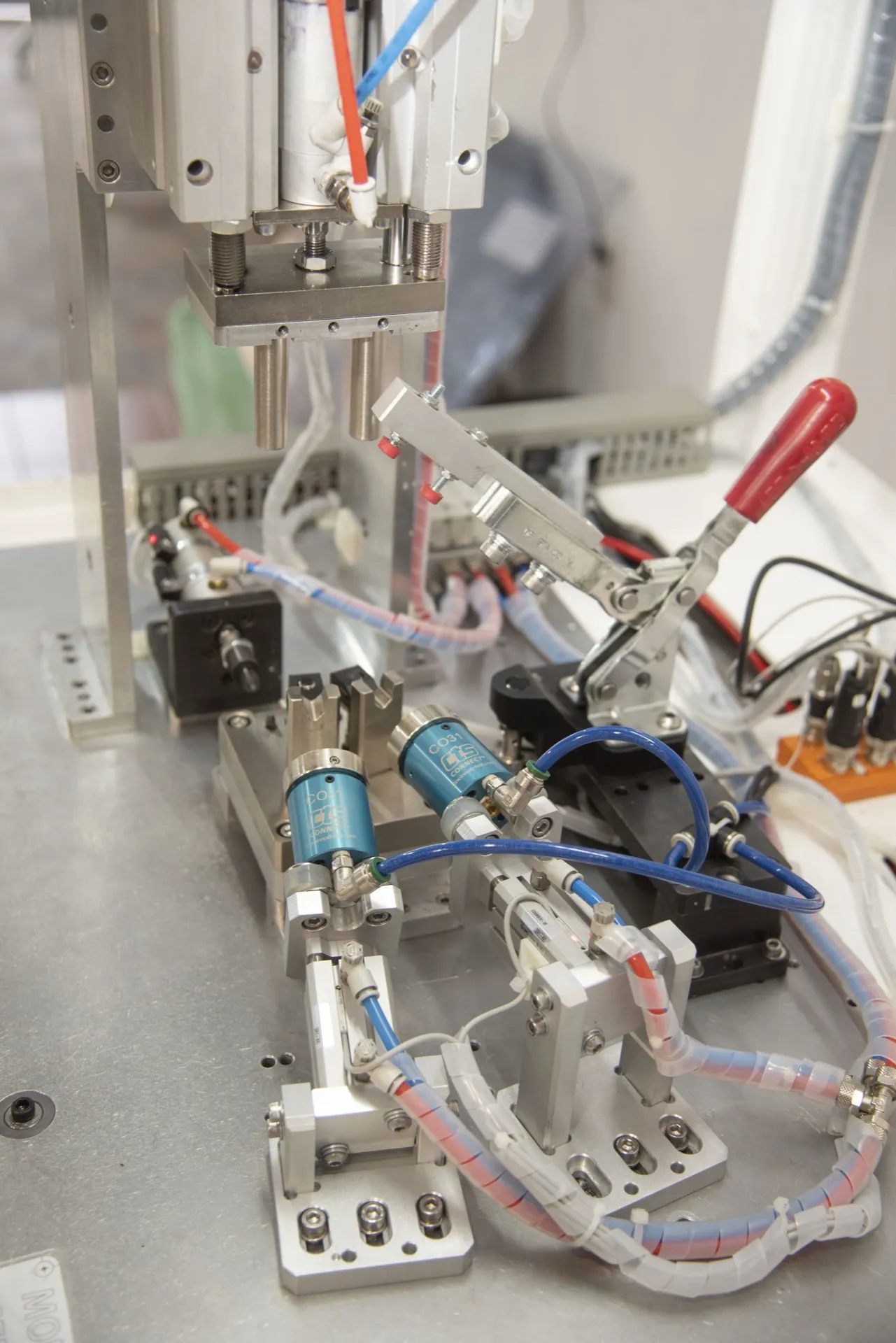
Picture this. It’s 2:30 in the morning. The line is running normally when an automated station suddenly stops. The problem looks small: a pneumatic valve stopped operating correctly, or a cylinder no longer completes its stroke. The component costs a few hundred or a few thousand pesos.
The question is: was that really the cost of the failure?
For most manufacturing plants, the answer is no. The real cost includes:
- Stopped production.
- People waiting for the operation to come back.
- Maintenance team time.
- Rework.
- Committed deliveries.
- Overtime to recover production.
In many cases, the cost of the downtime exceeds the value of the component that caused it by tens or even hundreds of times.
The most common mistake when selecting pneumatics
When a machine is designed or a component is replaced, the decision is often made by comparing prices alone. If a valve costs less, or a cylinder seems to offer the same specs, it’s easy to assume the two options are equivalent.
What doesn’t show up on the quote, however, is:
- Real service life.
- Air consumption.
- Wear resistance.
- Performance stability.
- Spare-parts availability.
- Long-term reliability.
And that’s where the differences appear.
Why are air leaks more expensive than they seem?
Compressed air is one of the most expensive resources in a plant. Generating it requires electricity, compressor maintenance, dryers, filters, and an entire infrastructure that usually goes unnoticed.
A small leak in a fitting, valve, or actuator can run 24 hours a day, 365 days a year. Now imagine that same leak multiplied across dozens or hundreds of points in a plant. What looked like a minor problem ends up showing in the electricity bill and in the extra load on the compressors.
Reliability: the difference between running and stopping
Pneumatic components work thousands or even millions of cycles over their service life. The difference between a component built for demanding industrial applications and a lower-quality one usually shows up after a few months of operation.
While some components start to show premature wear, leaks, or performance drift, equipment built for high-demand applications keeps running steadily for years. That’s why global manufacturers in sectors like automotive, electronics, medical devices, semiconductors, and food and beverage trust brands like CKD for their critical processes.
Beyond the purchase price
When evaluating a pneumatic solution, the right question isn’t: which one costs less? The right question is: which one will cost me less over the entire life of the machine?
Because a small difference in the initial price can mean:
- Less maintenance.
- Fewer air leaks.
- Fewer spare parts.
- Less downtime.
- Higher line availability.
- Higher productivity.
The best pneumatics are the ones nobody notices
When a valve works correctly, nobody talks about it. When a cylinder completes millions of cycles without failing, nobody mentions it. When a line runs without interruption, it’s simply taken for granted.
And that’s exactly where the real value of a reliable pneumatic solution lies. It isn’t only about moving an actuator or opening a valve. It’s about keeping production running.
As integrators, our priority is that the component we choose today isn’t the reason your line stops tomorrow. That’s why we size before we quote.
Do you know how many pneumatic components on your current line are generic? We can run that diagnosis with you. Talk to an engineer →